
Twelfth Night Online: expanding the network
In February 2018, Immersive Telepresence in Theatre expanded beyond its founding partnership for a week-long exploration of selected scenes from Shakespeare’s Twelfth Night. The established Coventry and Tampere team was joined by the Theatre Academy at the University of the Arts Helsinki and students from the University of Gothenburg.
The practical connection operated between two principal rehearsal spaces. Twenty Coventry students worked from their home institution, while six University of the Arts Helsinki students were joined in Finland by two students who had travelled from Gothenburg. Tampere staff remained part of the teaching and project team, contributing experience developed through Coriolanus Online and King Lear Online.
This was not a production of the complete play, nor did the project culminate in a public performance. Its purpose was exploratory, bringing students and teachers from four institutions into a shared programme of scene work, workshops and cultural learning. It tested whether the model developed between Coventry and Tampere could accommodate a wider range of participants, teaching approaches and institutional relationships.
Why Twelfth Night?
Twelfth Night was chosen partly because its comedy presented challenges that had not been central to the previous projects. Comic scenes depend upon rhythm, interruption, reaction and the audience’s awareness of information that individual characters do not possess. Even a slight delay between the connected spaces could affect the timing upon which a scene depended.
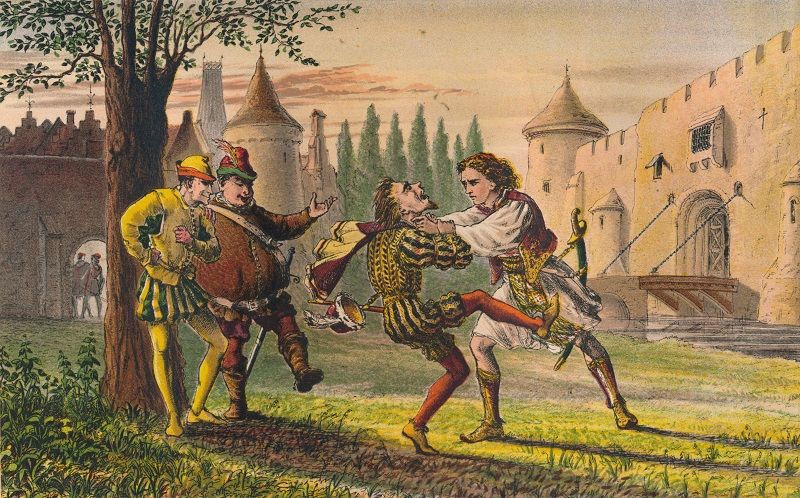
The Box Tree scene offered a particularly useful test. As Malvolio reads the letter planted to deceive him, the concealed characters observe and comment upon his reactions. The humour depends upon the relationship between visible and hidden performers, the timing of interruptions and the audience’s ability to follow several points of attention. Dividing these elements across the two telepresence spaces created opportunities to explore how concealment, proximity and reaction might work through the screen.
The students were encouraged to treat the connection as a particular kind of performance environment instead of attempting to reproduce an ordinary rehearsal unchanged. Camera position, scale and framing could alter the relationship between Malvolio and the hidden observers, while the separation between Coventry and Helsinki became another layer within a scene already concerned with watching, misreading and deception.
The project continued the established practice of working intensively on selected material. The aim was not to reach a finished interpretation of the play within one week, but to use its scenes to examine how actors could sustain comic rhythm, share attention and respond physically to partners working in another country.
Teaching across the connection
The practical work brought together workshops led by teachers and guest practitioners from Coventry, Tampere and Helsinki. Sessions explored voice, movement, theatre games and ensemble practice, allowing participants to encounter different approaches to performer training through the shared space.
Adobe Connect supported the work outside the main studios. It was used for contextual sessions on Twelfth Night, Renaissance theatre history and performance styles, as well as English pronunciation work. The platform also provided smaller rooms in which students could discuss scenes and continue working beyond the large telepresence sessions.
This combination allowed different kinds of learning to take place. The large projected space supported physical rehearsal, group exercises and experiments with timing, while the smaller online rooms enabled closer textual discussion and preparation. Teachers could contribute from different institutions without every participant needing to travel for the main course.
The presence of Gothenburg students in Helsinki also created a further layer of collaboration. They were not appearing from a third screen but working physically alongside the Helsinki students, while together they formed the group encountered remotely by Coventry. The project was therefore international in two ways: through the connection between the UK and Finland, and through the mixed group already sharing the Helsinki studio.
Encountering Finland in 2018
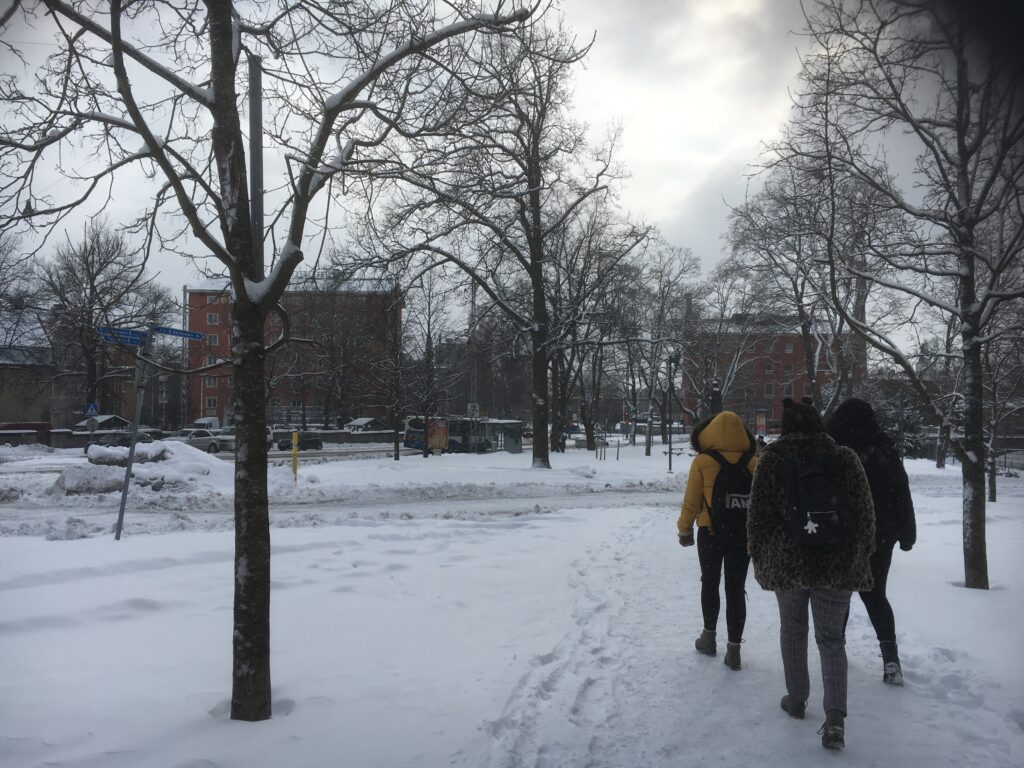
The remote course was followed by a visit in which Coventry students travelled to Tampere and Helsinki for classes, workshops and cultural activities. Unlike the King Lear residency, this visit did not culminate in a shared production. Its value lay in encountering the institutions, cities and cultural setting from which the Finnish collaborators were working.
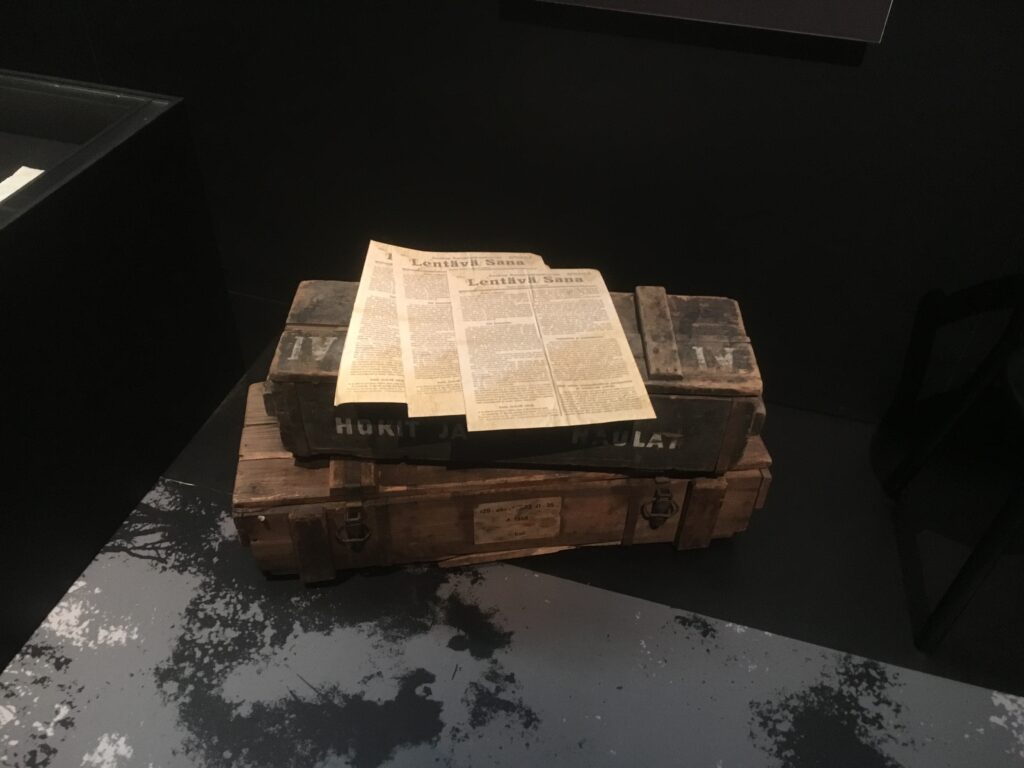
The visit took place during the centenary of the Finnish Civil War. Across Finland, the events of 1918 were being reconsidered through historical sites, museum exhibitions and theatre. The students encountered this national conversation through visits and performances, including Tytöt 1918 and Teatteri taistelussa (1918 Theatre in Battle).
These experiences introduced the Coventry students to a part of Finnish history that was unlikely to have been familiar to them before the project. Museums, historical locations and performances offered different ways of understanding how the conflict was remembered, represented and debated a century later. Theatre became part of that encounter, allowing the students to see how Finnish artists were responding to political history and collective memory.
The cultural programme was not simply sightseeing added around the classes. It placed the remote collaboration within a particular historical moment and helped the visiting students understand more about the society in which their partners were training and making work. The experience demonstrated that international theatre education could involve learning about the political and cultural life surrounding a rehearsal room, even when that material was not directly incorporated into the Shakespeare scenes.
What Twelfth Night changed
Twelfth Night Online marked the project’s first significant expansion beyond Coventry and Tampere. It demonstrated that the shared rehearsal model could support contributions from several institutions while retaining the practical focus on bodies, voices, timing and ensemble work.
The project also showed that expansion did not have to mean adding more screens. Gothenburg students travelled to join the Helsinki group, while teachers from several institutions contributed workshops and contextual teaching. Physical and remote participation were combined in different ways according to what each part of the course required.
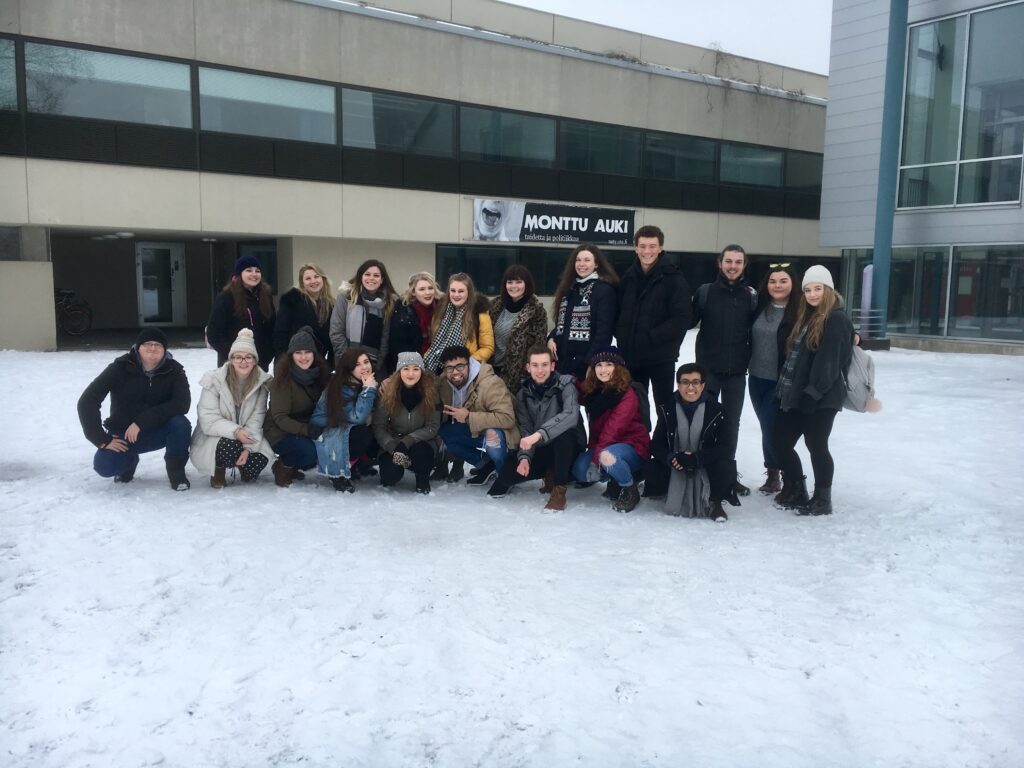
Most importantly, the visit to Finland broadened the project’s understanding of international learning. The students’ experience was shaped not only by Shakespeare and telepresence, but by the theatres, museums, historical sites and political memory of the places they visited. This connection between rehearsal and cultural context would become increasingly important as the initiative developed.
Twelfth Night Online did not produce a finished performance, but it changed the scale and character of the collaboration. What had begun as an experiment between two universities was becoming an international teaching network capable of bringing different institutions, training traditions and cultural perspectives into the same educational process.